
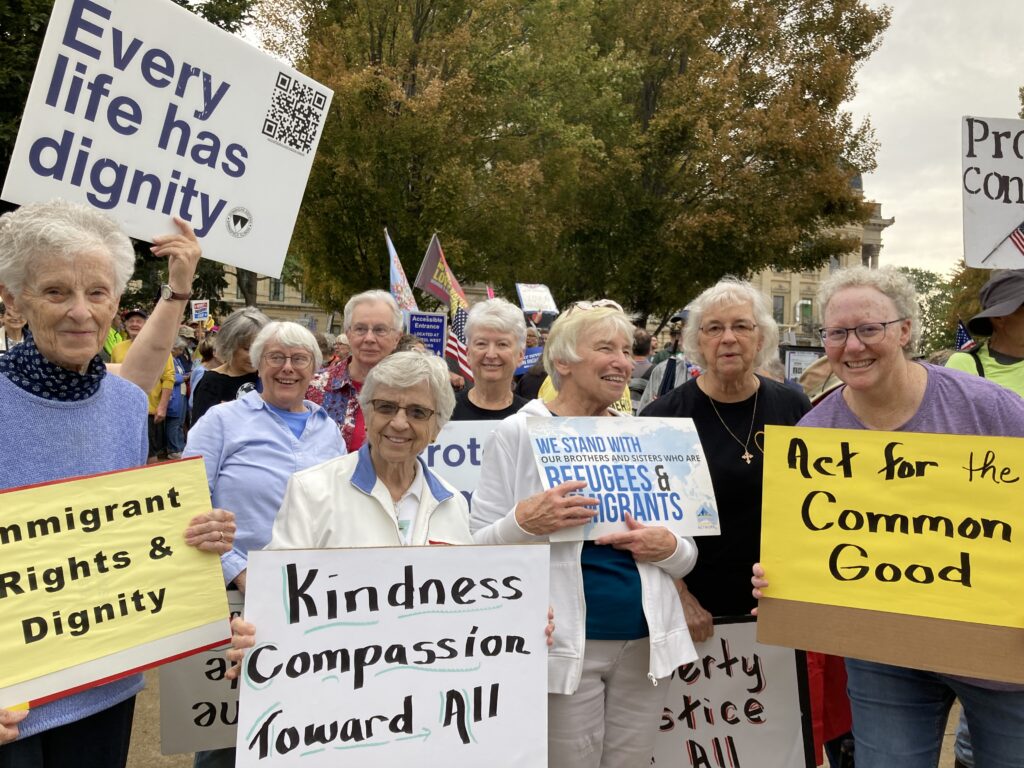
Springfield Dominican Sisters were among those present at the State Capitol on October 18 in protest of the anti-immigrant policies of the Administration. From Left to right: Sisters Judith Curran, Dorothy Marie Solak, Martha Marie Kirbach, Beverly Jeanne Howe, Ann Clennon, Kathleen Ryan, Marcelline Koch, and Elizabeth Wrenn.
By Sister Kathlyn Mulcahy, OP
Close your eyes and imagine justice. What do you see? Look beyond the Lady Justice statue sometimes seen outside courthouses, blindfolded and bearing a sword and scales to represent authority and impartiality. Justice both gives and restores life, recognizing the inherent dignity of every person. She is not blind; rather, she sees those whose dignity is violated. She is not carved in stone; rather, she is active in her efforts to restore dignity denied. She has many faces: male, female, young, old, dark skinned, light skinned. She is embodied in all those who recognize and seek to honor the God-spark present in every person.
- In Chicago, she uses a whistle in a grassroots campaign to alert those targeted because of their skin color or birthplace. When they hear the whistle, people can choose to stay indoors—or go out to join the whistle brigade to help alert neighbors. She risks tear gas and chemical agents for the sake of brothers and sisters she may have never met.
- She walks the neighbors’ children to school because they are afraid of ICE agents sitting outside the school. She picks up groceries for them. She doesn’t ask those neighbors about their immigration status or citizenship but knows the color of their skin makes them a target.
- She slows down in traffic when she is followed by a large SUV with darkened windows and no license plates. For her, dignity means honoring her immigrant parents’ sacrifices and cultural roots while carrying herself with pride in every space she enters. It’s about valuing where she comes from and contributing to her community in a way that uplifts her heritage and the people around her.
- She offers hospitality in her own home to young adult immigrants who need a place to stay as they transition to greater independence. She mentors them in their growth, education, and empowerment.
- She organizes Sisters and Brothers of Immigrants (and friends and allies) to stand in silent witness on busy street corners with signs reminding all who see them that immigrants in search of safety for themselves and their children are human beings with God-given dignity.
Justice is active and gets involved. Her hands and feet—and eyes and heart—are yours.
She stands in solidarity with immigrants and citizens, recognizing that solidarity is about interdependence. We depend on each other; we need each other; we mutually complete each other.
Unfortunately, these incarnations of Justice are needed now because of today’s cruel and unjust immigration policies that violate human dignity: sweeping arrests, harsh detention conditions, lack of due process, family separation, and exploitation of vulnerable (and necessary) workers. Policies that demand daily immigration arrest and deportation quotas instill fear and encourage warrantless arrests. Accusations by political leaders that those arrested are “the worst of the worst” sow division and imply the guilt of people who have lived in this country, many times for decades, without ever committing criminal offenses. Indeed, many recent immigrants—those I know and share life with—have followed all the rules in effect at the time they entered the country and received permission to stay while they pursue asylum or other permanent status.
Many of the unjust policies and practices conflict with international human rights standards which affirm that all individuals, including immigrants, are entitled to fundamental rights regardless of their legal status.
- For-profit immigration detention centers have been criticized for creating punitive and harmful conditions: overcrowding, significant delays in providing medical care, poor food quality, and lack of access to language interpretation services.
- Denial of due process, such as access to legal counsel or opportunities to challenge the basis for detention or deportation, is common in a political climate focused on rapid deportation, sometimes with a disregard for national or cultural origins.
- Families are separated, causing severe emotional and psychological trauma. Vulnerable women and children are left without income or housing. Justice tries her best to help those families. She provides temporary housing and food, helps find childcare or schools, and eventually helps secure work for the mothers so they can sustain their families with dignity.
Sister Simone Campbell, a Catholic Sister of Social Service, lawyer, lobbyist, and former executive director of NETWORK, suggests on The Nonviolent Jesus podcast (S1, E43, October 27) that “hope is critically connected to touching the pain of the world as real. It demands a response.” In the context of immigration, hope and justice walk hand in hand. She concludes, “Everyone has a piece of the work of justice to do, so what’s yours?” Justice is active and gets involved. Her hands and feet—and eyes and heart—are yours.
 Sister Kathlyn is a member of the Dominican Sisters leadership team and the director of Bethany House, a shelter for women and children in the asylum process.
